
The History of Wigs: From Ancient Egypt to Modern Times
Wigs have never been merely a passing trend: they are a time-tested, essential accessory throughout the history of civilization.
In the history of fashion, the wig emerges almost simultaneously with civilization itself. Historical evidence confirms its widespread use across ancient eastern empires, including Ancient Egypt, Assyria, Babylon, Sumer, and Akkad.
THE WIG AS A SYMBOL OF POWER
The earliest known depictions of wigs date back to the late 3rd Dynasty of Ancient Egypt (around 2600 BCE). Wigs were worn over clean-shaven heads. Natural hair was offered in sacrifice to the gods, while wigs were crafted from human hair woven with date palm fibers. Archaeological excavations uncovered the wig of High Priest Menkheperre (circa 1000 BCE).
The trend flourished throughout European royal courts. Queen Elizabeth I of England wore elaborate wigs to conceal grey hair and hair loss following a bout of smallpox.
The fashion for powdered wigs was popularized across Europe by King Louis XIV of France in the 17th century. It remained dominant throughout the height of Versailles influence until the French Revolution. By the end of the 18th century, abandoning powdered wigs became an emblem of modern enlightenment and new thinking.
WIGS IN THE 1970s USSR

In the 1970s Soviet Union, fashion-conscious women never concealed wearing wigs; instead, they proudly showcased them. Those wigs distinctly resembled stylish headwear.
Wearing a wig was considered highly prestigious and fashionable, largely because of their significant cost. Wigs were unavailable in open retail: they could only be obtained privately through black-market dealers, brought from abroad, or commissioned via bespoke artisan workshops.
WIGS TODAY

Today, wigs are no longer reserved solely for hair loss solutions or stage performers. In the wardrobe of a modern businesswoman, a bespoke wig has become an indispensable styling asset.
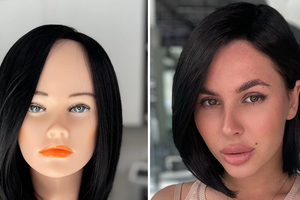
Today, premium wigs are indistinguishable from naturally growing hair.
The master wigmakers at Korol Natali have achieved such refined artistry that even industry specialists often cannot tell whether someone is wearing natural hair or a handcrafted piece.
The secrets of our artisanal craftsmanship have been preserved in our family through generations. In every piece we create, uncompromising quality and premium natural materials remain our highest priorities.
WIGS VS. HAIR REPLACEMENT SYSTEMS: WHAT IS THE DIFFERENCE?
With abundant hair care information online, the same hairpieces are frequently referenced under different names. Here are the core distinctions:
Essentially a modern high-tech wig built upon a delicate, breathable mesh base where 2–3 hairs are hand-tied individually. A silicone perimeter allows adhesive attachment directly to the scalp. It mirrors the scalp's contours seamlessly when custom-made or tailored to your precise measurements. Haircut, length, density, and color are fully customizable upon order.
Shares the same craftsmanship as a hair replacement system, but does not require bonding adhesives to the scalp. It slips on and off effortlessly in seconds.
A versatile two-in-one piece. It can be secured with medical-grade adhesives to the scalp or simply worn and removed daily like a classic wig.
If you have your own hair, a hand-tied wig is generally the ideal choice. For dependable security, discreet inner clips are integrated to fasten gently into your biological hair.
Wigs, mono-wigs, and hybrid mono-systems handcrafted by Korol Natali always provide an entirely natural appearance, as the silhouette, shade, hair texture, and density are personalized to complement facial contours, skin tone, eye color, and unique features.
Wigs always were, are, and will remain timeless! Only the manufacturing techniques evolve.
Call, message, or visit us in person: our team is always ready to provide expert advice on hairpieces and assist you in selecting your ideal piece.