Topper Guide
Topper bases: gluing, sewing, or clips — which is better to choose?
We explain the different types of hair topper bases, how they differ, and how to choose an attachment method for your goals — from a temporary hairstyle change to permanent wear. Choosing the right base is key to your comfort and confidence. Some materials flawlessly imitate the natural scalp, making the piece completely undetectable, while others focus on maximum lightness and breathability. In this article, we will analyze the benefits of each option in detail so you can make an informed decision and find your perfect accessory.
Types of topper bases
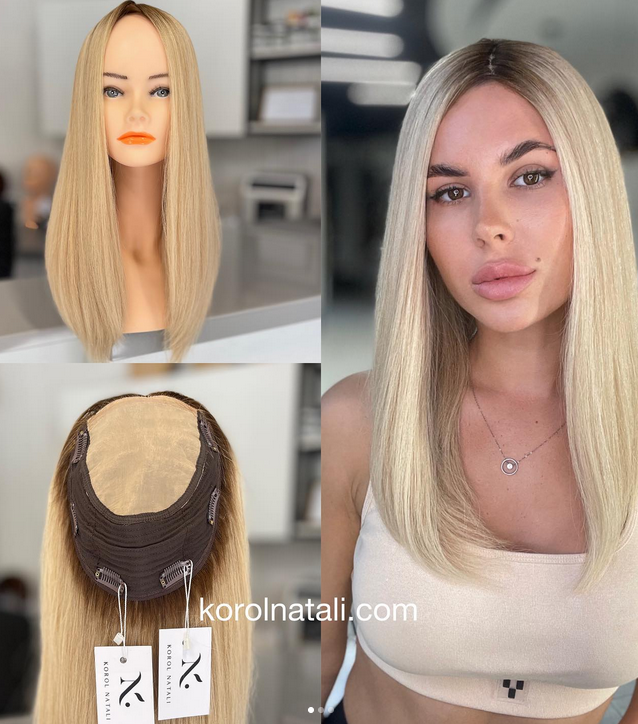
Topper bases can be very different, and it is on them that how well and how securely the topper stays on the head depends. The note "fully or partially" means that manufacturers often combine several types of bases in one product — this allows combining attachment strength with a natural look and wearing comfort.
Lace
The thinnest and lightest base. Smallest sizes, pairs well with other bases.
Monofilament
Thin and light, often works together with lace for hair parting detailing.
Fabric
Maximally imitates the natural scalp, keeps a stable shape of the topper.
Polyurethane
Thin, elastic, also naturally recreates the look of the scalp.
Silicone
Chosen by men for gluing — a secure hold.
The names of the bases are generalized: each manufacturer may have materials that differ in composition and even exist in several variations.
How to choose the attachment method
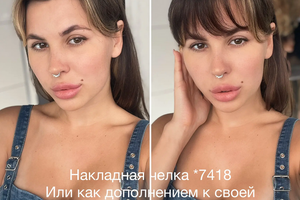
If you need to add volume and/or length to your own hair, the topper is attached using special clips. This method is convenient because hairstyles can be easily changed: with bangs today, without them tomorrow, and a long-hair topper can be worn periodically as a quick temporary "extension".
If the goal is to permanently wear a full hairstyle as if it were your own hair, the topper is fixed with glue or special tape. This method allows you to wear the topper continuously, with a touch-up approximately every 2-4 weeks.