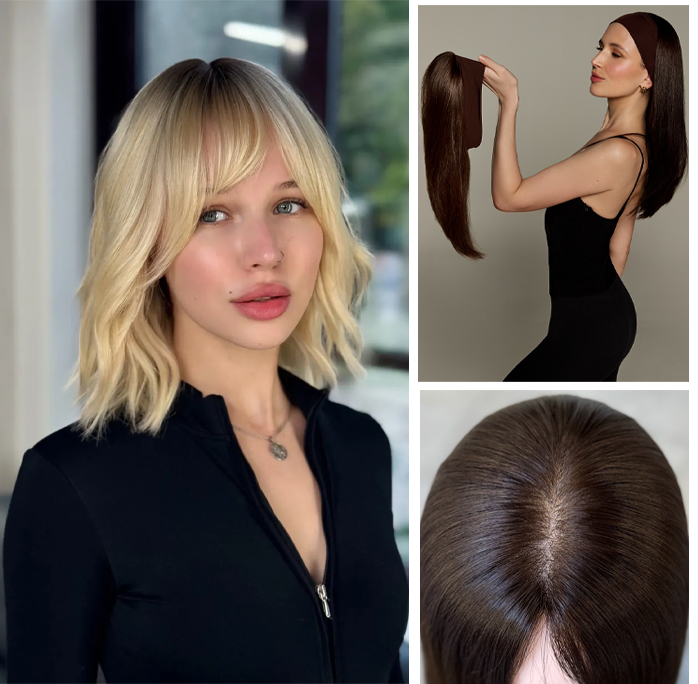
Wig, system, mono system: what is the difference?
Three words often used to describe the same product — yet representing three entirely different bases that determine the weight, naturalness, and wearing method.
For many people, the search for the perfect solution begins with these terms. However, without understanding the nuances, it is easy to get lost in the assortment. Our goal is to help you figure out the intricacies of the construction so that you can make an informed choice. After all, a properly selected base not only provides an aesthetic appearance, but also guarantees self-confidence and maximum everyday comfort, regardless of your lifestyle.
When a client says "wig" and the stylist clarifies "system" or "mono system" — this is not just terminology. Behind each name lies a specific technology for attaching hair to the base, and it is this that determines how light, unnoticeable, and comfortable the product will be for daily wear. Let's see what is hidden behind each base.
Product Base — The Foundation of Naturalness
The most modern way to attach hair to a base is ventilation (hand-tying). Hair by hair is woven into a mesh, monofilament, or fabric imitation base, mimicking the natural growth of hair from the scalp. The work can be done by machine or manually — manual ventilation provides the maximum density control over the direction of hair growth and, accordingly, the most realistic result.
It is the products made completely or partially using this method that receive the names "wig", "system", or "mono system" — depending on what base is at the core of their design. They are united by one main thing: they are thin, lightweight, and maximally imitate the natural look of hair growing from the skin.
Such products can either be put on and taken off as needed, or attached directly to the scalp — it all depends on the desired wearing method.
Hair Material: Two Approaches, One Result
Regardless of the type of base, both natural and artificial hair are used for manufacturing. The choice of material is a separate decision that affects the care, durability, and budget of the product, and it should be discussed separately from the base type.
Classic Technique: Weft
This is the oldest and most time-tested manufacturing method — hair is sewn in strips (wefts) onto a textile base. Products completely made this way are simply called a "wig". They are more voluminous and heavier than their hand-tied counterparts, but often win in density and durability.
How to Choose Your Option
The answers to these three questions immediately narrow down the choice: a light ventilated base suits those who value weightlessness and a natural parting, while a classic weft suits those who prioritize density and longevity. But you can only truly see the difference and feel how the product sits on your head during a consultation.
The KOROL NATALI salon offers a wide selection of products with different bases, and experienced stylists will help you choose the option that fits your lifestyle and adapts to your new look.